
Case Study: Gemineye Data Analytics
A Website Refresh to Leverage GEO Best Practices Without Breaking the Bank
Profile: Gemineye is a leader in data analytics and AI for community financial institutions
Industry: Fintech
Gemineye provides best-in-class data analytics and AI solutions at a price that credit unions and community banks can afford, lowering the barrier to entry for smaller institutions to modernize. They are a disruptor in the analytics fintech space, competing with much larger organizations who are backed by big investors. This means they have to be efficient with their marketing budget, investing in strategies that will grow their brand awareness without breaking the bank.
We partnered with Generation Web, our go-to development team, and Stephen May of Crescent Leaf Technologies, to refresh Gemineye’s two-year-old website for new generative engine optimization standards. The results? A site remodeled to cater to the modern demands of AI and search, which placed Gemineye miles ahead of the less-nimble competition for keyword ranking, AI search visibility, and topical authority.
Disciplines
GEO
Competitor Research
Wireframing
Web Design
Copywriting
Site Navigation
"One of the biggest mistakes you can make is treating a website build like a finished product.
You build it, dust off your hands, call it done, and never touch it again for years. This landscape is always shifting, and AI is accelerating that change faster than anything we've seen before.
A site that was best-in-class two years ago can quietly fall behind without anyone noticing. Staying competitive means treating your website as something living, something you revisit, refresh, and evolve as the rules change."
— Joyce Vincent, Generation Web
Project Goal
We had been working with Gemineye since 2023 and led their rebrand, website, and content strategies – so we were no stranger to the organization. But in that timeframe, so many things had changed in the industry. Advancements in AI created a firehose of new vaporware analytics companies to compete with. And whether they were legitimate competition or not, they were taking up valuable market space.
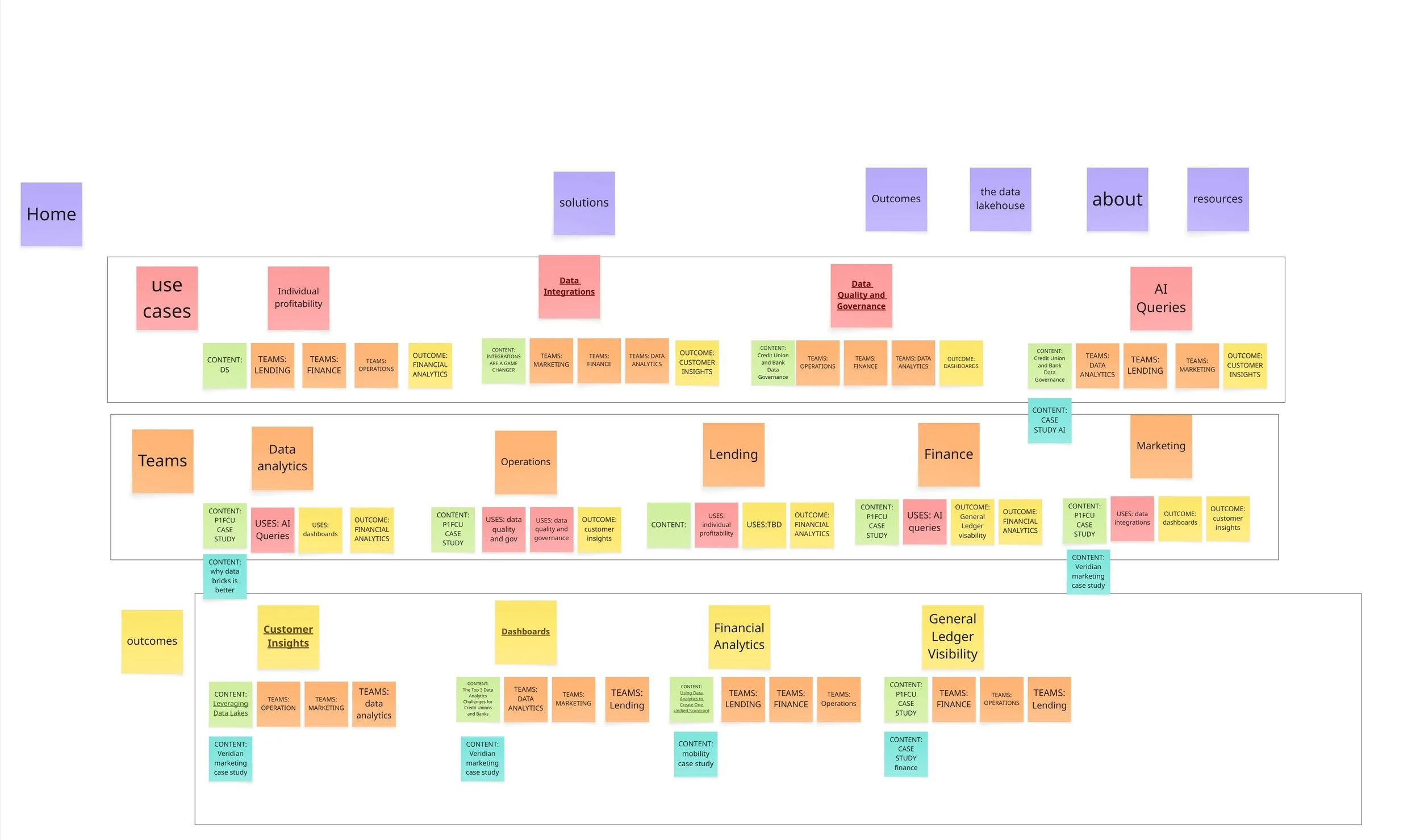
What’s more, the rise of AI-driven search fundamentally changed how content gets discovered. Generative engines like ChatGPT and Perplexity, along with Google's own AI surfaces, began synthesizing answers rather than returning ten blue links. That shift rewarded a different kind of site: one organized around topical depth and context rather than individual keywords. A contextual hub-and-spoke structure, with rich, interconnected content and clear signposting, became far more valuable than pages built to target single search terms.
"The shift wasn't that SEO stopped working. It's that the definition of a good page changed.”
Search engines and AI models both started rewarding depth and context over keyword placement, which meant a site organized around individual keywords was suddenly at a structural disadvantage.
Gemineye needed an architecture where every page reinforced the others. That's what hub-and-spoke does, and it's why we rebuilt around it rather than just optimizing what was already there."
— Stephen May, Crescent Leaf Technologies
The Importance of Identifying Your Target Audience
According to Stephen, the process starts with the audience, not the site. We mapped Gemineye's two buyer personas, the technical analytics lead and the non-technical executive, and worked out what each one actually searches for and where they get stuck. That tells you what the hubs need to be. From there it's about making sure every page has a job: it either anchors a topic or it supports one. If a page doesn't do either, it's diluting the site rather than strengthening it. The discipline is in the linking, making sure related products, resources, and testimonials sit where someone would naturally look for them, so both people and AI models can follow the thread.
Using whiteboarding tools Miro and LucidSpark to precisely map out the hub-and-spoke structure allowed us to create a roadmap before we started designing.
Project Challenge
Outranking the Competition with a Smaller Budget
As a disruptor in the analytics space, it was critical that Gemineye leverage these new methods to get visitors to their site without having to throw big money at advertising. But doing so would require an entirely new framework, messaging, and navigation of their site. This is where we stepped in.
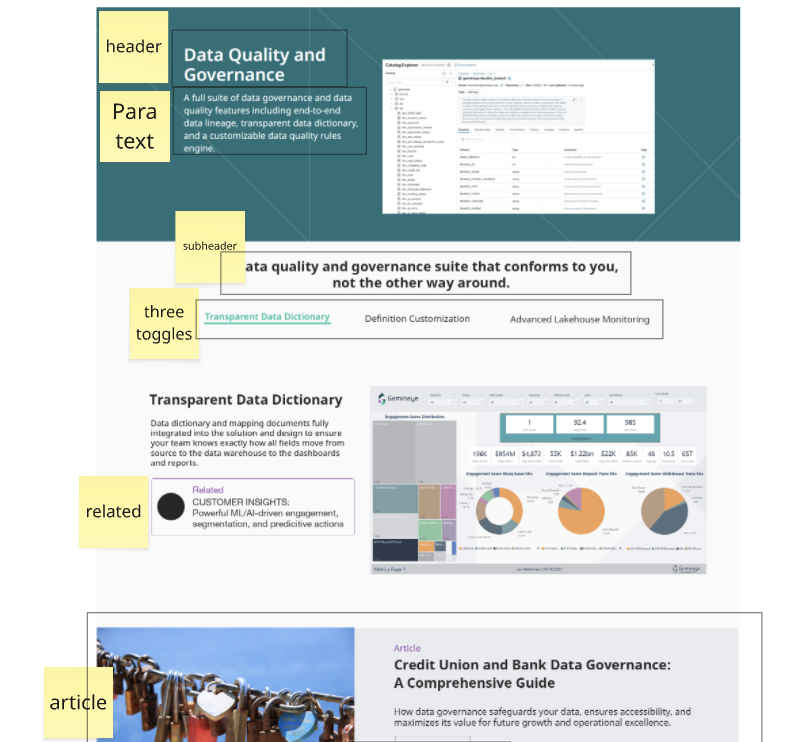
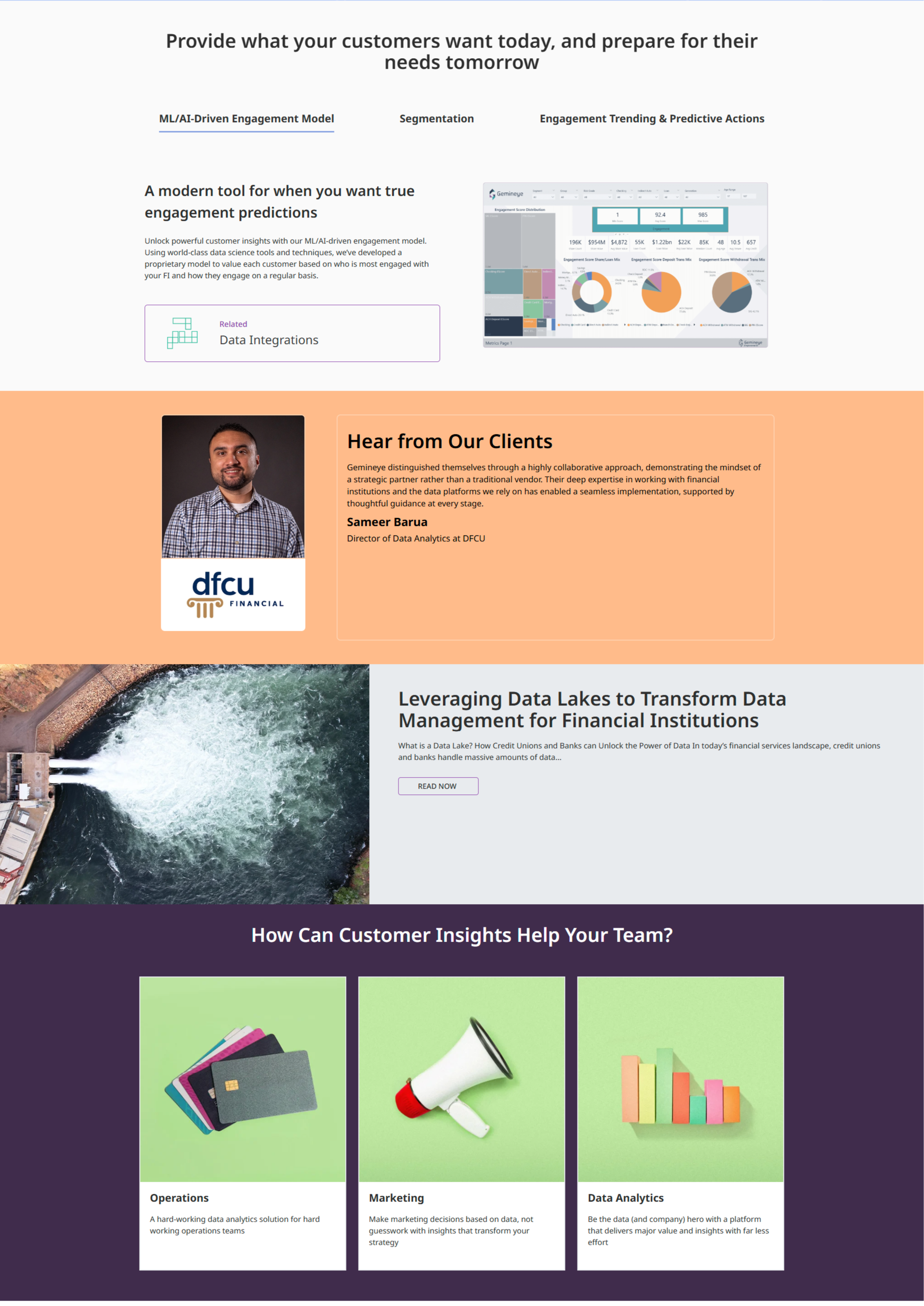
Led by Stephen May, a specialist in GEO and content strategy, we worked with Generation Web to develop a new hub-and-spoke navigation with product and services pages rich with items like:
Similar products
A resource relevant to the product
Quotes and testimonials related to the product
Other adjacent areas of the site to explore

The GEO Benefits of A Content Library
We also developed a resource library strategy to continually produce relevant content that aligned with personas and products specific to Gemineye’s market. Stephen explains how it works:
“The resource library operates under the hub-and-spoke model. Each solution and outcome page acts as a hub. Every article we produce is a spoke that supports one of these hubs. Articles are selected based on what Gemineye's specific personas are searching for, then internally linked back to the relevant hub. Over time this builds topical authority: instead of one page mentioning data governance, the site has a network of connected content covering it thoroughly. That depth is what AI engines look for when deciding which sources to cite, and it's what compounds over months rather than delivering a one-time bump."
Project Solution
Implementing GEO Changes with Speed and Efficiency
In just a few months of redesigning the website, Gemineye was seeing significant progress in keyword ranking while competitors stayed stagnant. Their nimble, modern team allowed them to make decisions swiftly without the bulk of a big company.
We handled the creative direction and design of the pages, while Generation Web handled the development. Stephen, of course, provided guidance on strategy and competitor positioning.
"What made this work was that Gemineye could move.
We identified the structural changes the site needed, and the team executed without the layers of approval that slow larger competitors down. That speed is a real competitive advantage right now, because the search landscape is shifting faster than most organizations can respond to. Being right about the strategy matters less than being able to act on it quickly, and Gemineye did both."
— Stephen May, Crescent Leaf Technologies
GEO Strategy Results
Search visibility nearly doubled while average ranking position more than halved
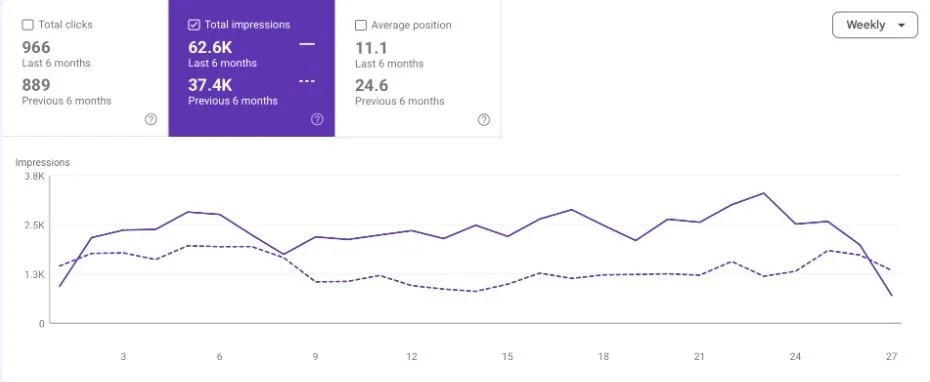
Comparing the 6 months following the refresh to the 6 months prior, Gemineye's total search impressions grew from 37.4K to 62.6K, a 67% increase, while total clicks also rose. Average ranking position improved from 24.6 to 11.1, moving the site from the third page of results to the edge of page one across its tracked queries.
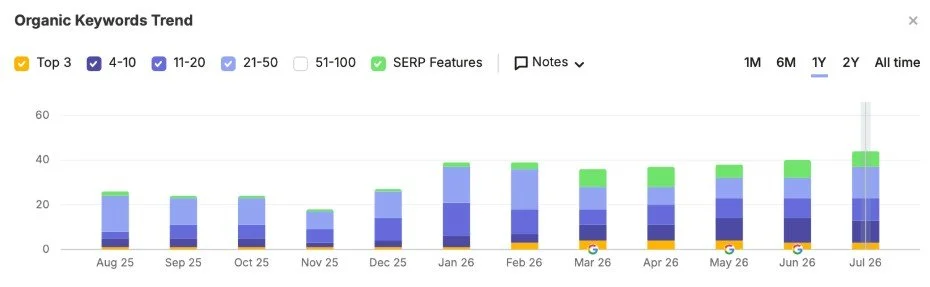
Rankings climbed into positions that actually earn clicks
The chart captures Gemineye's keyword performance before and after the refresh, which launched at the turn of the year. Through late 2025, most rankings clustered in positions 21 to 50, where traffic is negligible. From January 2026 forward, the composition shifted markedly: consistent top 3 placements, a much larger share in the top 10 and top 20, and steady growth in SERP features. The gain is not simply visibility. It is visibility that lands where prospects actually look.
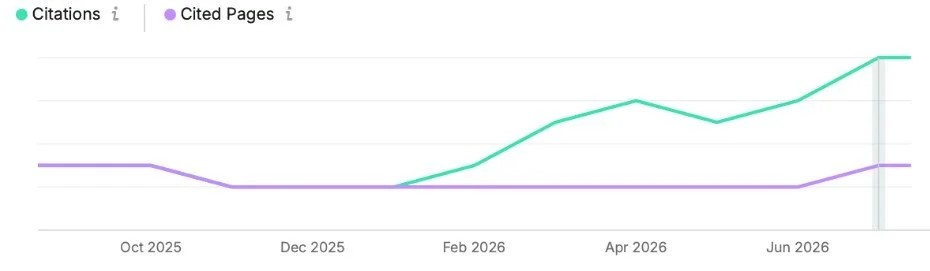
AI Engines Began Citing Gemineye as a Source
As search shifts toward AI-generated answers, citations become the new visibility. This tracks how often generative engines reference Gemineye when answering questions in its space. Citations have climbed steadily since the refresh, reflecting the deeper, more interconnected content structure that AI models draw from when selecting sources. Most competitors in this space are not yet measuring this at all.
"The best part of a project like this is watching all the pieces click into place.
Our development work, Stephen’s timely GEO expertise, and Alicia's creative vision and design all coming together, and then actually seeing it move the numbers. It's one thing to build something you're proud of. It's another to watch it deliver real, measurable results for the client. When you have a team of specialists who trust each other pulling toward the same goal, this is what you get."
— Joyce Vincent, Generation Web
Interested in our GEO and web design services for SaaS and tech?
We’d love to talk with you more about your organization’s unique goals.
Connect with us here 👇
🥾Explore Similar Projects

![[Interview] Mastering Event Design and Branding](https://images.squarespace-cdn.com/content/v1/520554d2e4b004c7f36bec69/1789608025467-7IHE8I3LSY54IT1PGK6N/BEYOND+THE+BEO+copy.jpg)
![[Video] Differentiators: The Key to a Unique and Trustworthy Business](https://images.squarespace-cdn.com/content/v1/520554d2e4b004c7f36bec69/1683774660535-J2H0J7TEUNNIW52ZZSLS/differentiators+2.jpg)
![[Video] What B2B Organizations Can Learn from Grubhub’s Super Bowl Ad](https://images.squarespace-cdn.com/content/v1/520554d2e4b004c7f36bec69/1782261989393-KKHR1LUKY3W8X51BXMMT/superbowl+2026+WIDE.jpg)