
The Irreverent Genius of Buc-ee’s Branding
How Gas Station Chain Buc-ee’s Uses Brand Strategy to Create a Cult Following
By Alicia Disantis, Chief Brand Strategist and Owner
I visited my first Buc-ee’s on an unseasonably warm Christmas Eve in Calhoun, Georgia, a small town an hour northwest of Atlanta. I hadn’t heard of Buc-ee’s until summer of 2025, when the Texas-based gas station chain’s first Virginia location opened. Since then, I’ve been told that Buc-ee’s is “magical” and a “must visit” by my fellow Virginians.

How could something so mundane as gas station/travel center chain create such a passionate following? What marketing strategies could foster a tribalist brand movement (learn about tribalism in my videocast here) so powerful among commodities like gas and snacks?
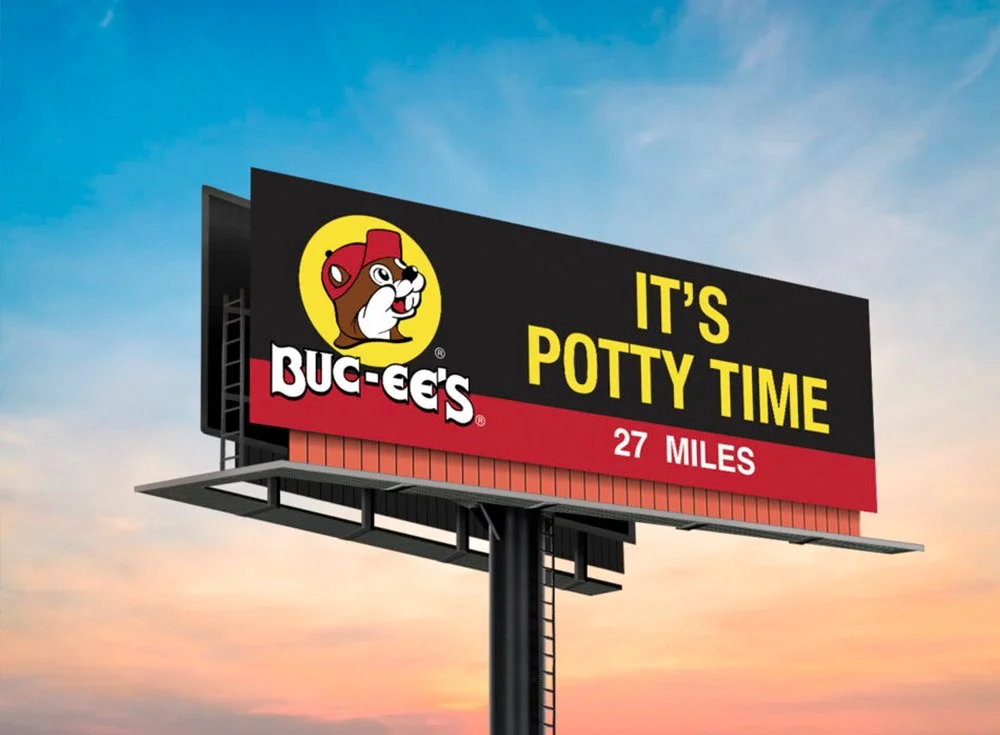
Driving further and further south, it became obvious to me that this was a religious experience of sorts; Buc-ee’s billboards popped up every few miles for hours, enticing me with mysterious and witty marketing. I simply had to experience it for myself – and what better time than Christmas Eve to take the pilgrimage?
What is Buc-ee’s?
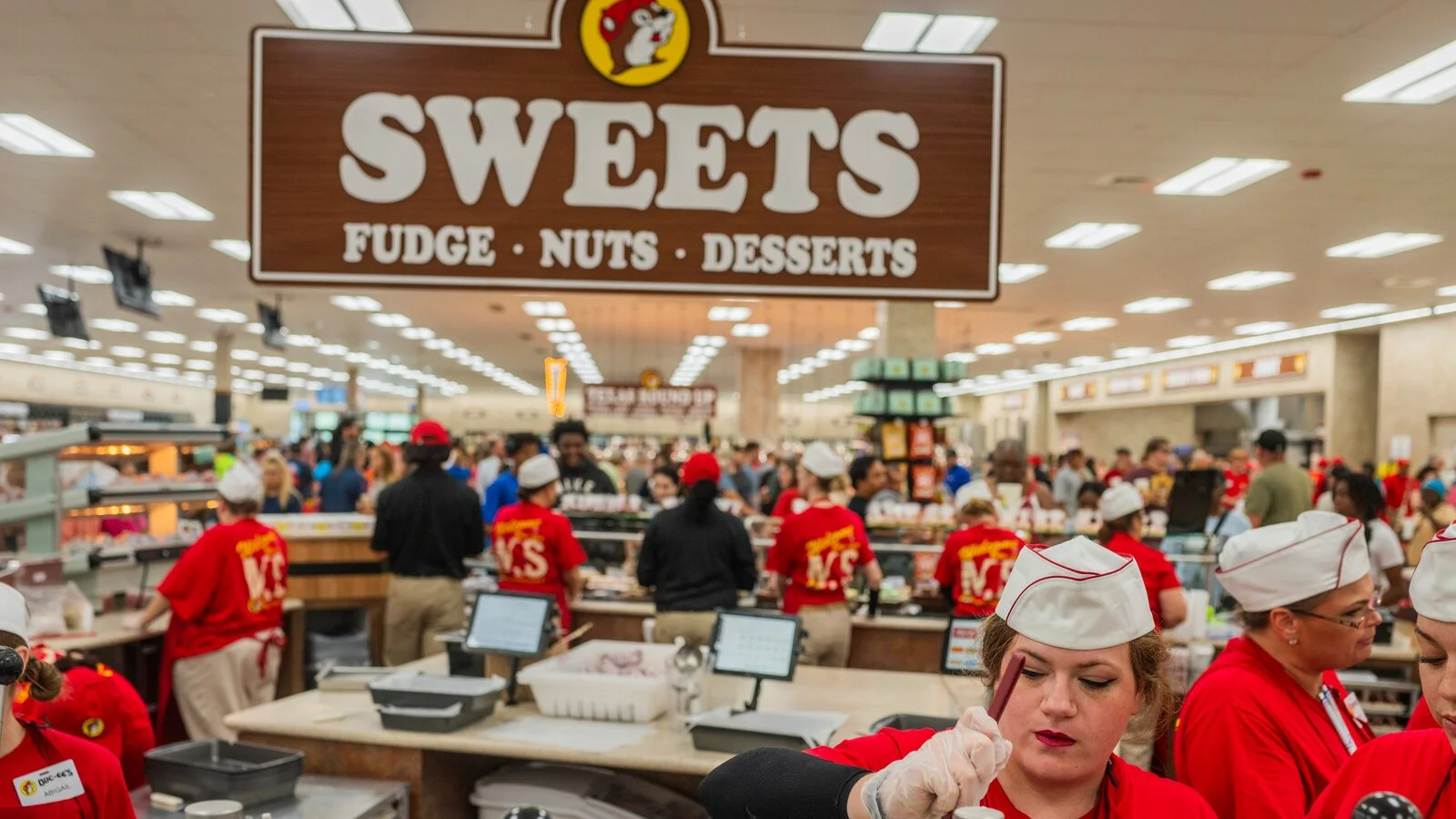
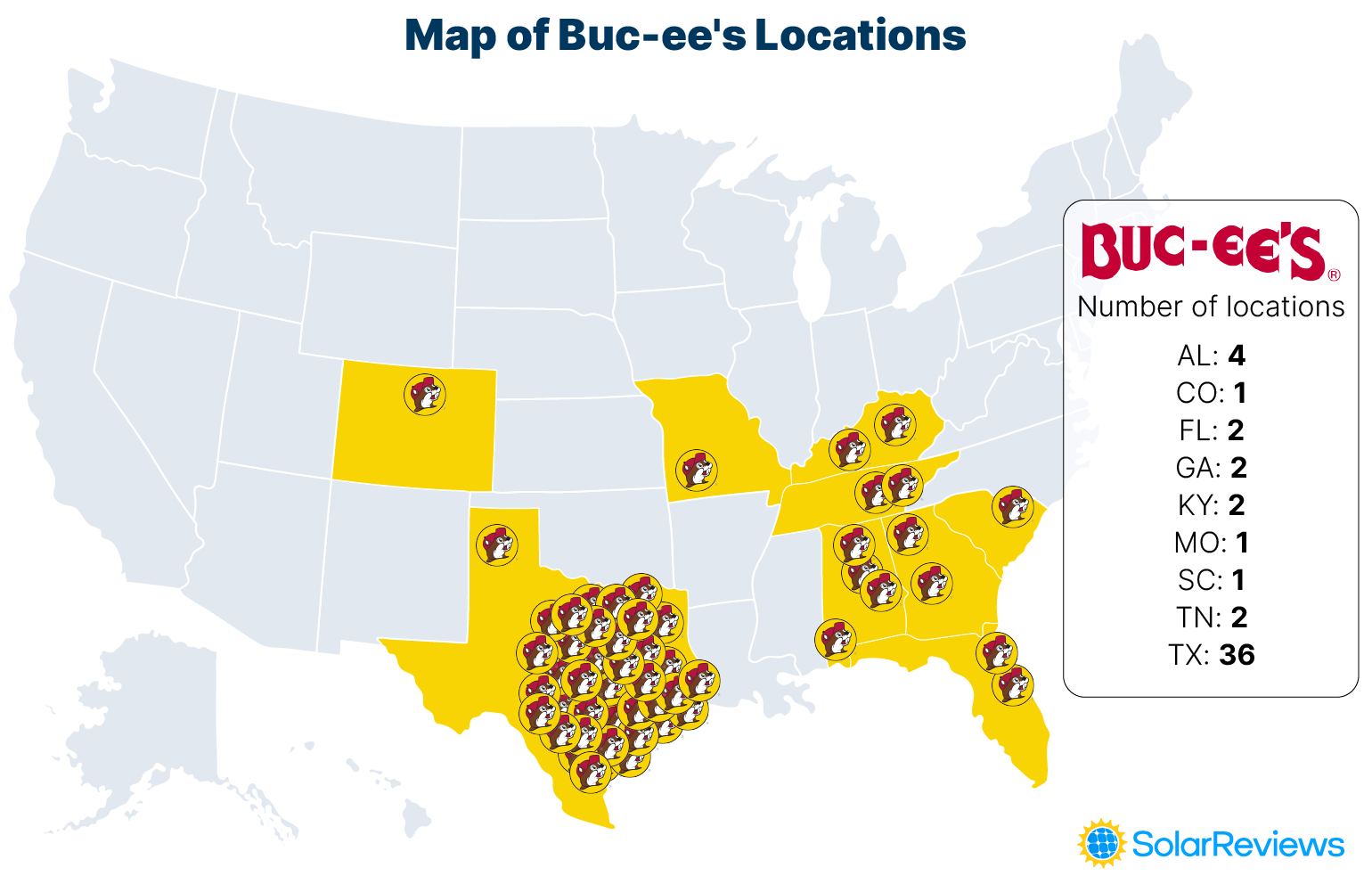
Buc-ee’s is essentially branded as a travel destination while traveling to a destination: a massive travel shop, restaurant, souvenir store, and gas station in one. Concentrated in Texas and spread across the southeast (and one in Colorado, oddly), Buc-ee’s has 58 locations nationwide. Seem small? That’s because it is, compared to other American gas station chains like 7-Eleven with 13,000 locations. But what they lack in number of locations, they make up for in sheer size of each one.
Pinnacle terms are often used as marketing descriptors for Buc-ee’s offerings, such as “America’s cleanest bathrooms,” “most fuel pumps,” “cheapest brisket sandwich,” “best customer service.” Buc-ee’s holds two world records: Their Luling, TX store is the largest convenience store in the world at 75,593 square feet, and their Katy, TX store boasts the world’s longest car wash at 255 feet of conveyor.
“Buc-ee’s has remained committed to providing award-winning clean restrooms, freshly prepared food, cheap gas, and outstanding customer service,” says Buc-ee’s spokesman and general counsel Jeff Nadalo, in an article from CNN. But is there an actual brand strategy behind the larger-than-life mythology of Buc-ee’s? Turns out, Buc-ee’s uses the same tried-and-true foundational branding principles that we can use for our own companies. Let’s learn more.
The Buc-ee’s Know, Like, Trust Branding Strategy
While Buc-ee’s popularity may seem to be propped up by Americans’ fascination with everything big, there is a method to their marketing success, and it centers around the foundational (KLT) Know, Like, Trust brand strategy. As obvious as it sounds, KLT answers these three questions:
How do customers know you?
Why do customers like you?
Why do customers trust you?
All three of these components must exist for an organization to find fully-realized marketing success, yet are entirely mutually exclusive. Think of it this way: You can certainly like somebody and not trust them, right? And you can certainly trust somebody but not like them. And of course, you have to know about them, first. I’ve spoken about KLT before, and you can find a KLT refresher in my video here and here.
Buc-ee’s implements KLT with great success. Customers know them because of several factors, such as buzzworthy, memorable features and awards, like “America’s cleanest bathrooms.” Customers like them because they are convenient and cheap, which is hard to come by. And finally, customers trust them because they are consistent and follow through on promises. There is something very comforting about knowing that if you stop at any Buc-ee’s, you’ll have access to a clean restroom, in a world of Russian-roulette gas station bathrooms. You’ll be able to get a hot meal that won’t make you sick. You’ll be treated with kindness.
The real test of the trust component in KLT is repeat customers. Sure, you can have one great experience, but the key to trust is the consistency variable, i.e. a great experience regardless of time or place. ChatGPT tells me that “According to foot-traffic analysis from Placer.ai for the Buc-ee’s in Daytona Beach, FL, over a 12-month period that 33% of visits were by repeat customers at that location.” If the Daytona Beach location is any indication of national Buc-ee’s trends (which don’t yet exist), we can see that repeat visits represent a successfully integrated trust brand component.
Buc-ee’s Brand Personality and Messaging Strategy
Buc-ee’s is a compelling example of the importance of having a unique brand personality and voice. They have developed a masterful brand personality and integrated it across its main marketing vehicle: billboards. And the billboards are downright dominating. They seem to exist every few miles as you get closer and closer to a Buc-ee’s location. They all have a ubiquitous black background and giant ecstatic beaver head logo, with just a few words of text. They are delightfully abstract and lean into the IYKYK, tribalist strategy; you feel special if you get the message.
Some of them are a call to action to exit now. Some of them are slang phrases that reinforce what they are known for. Some of them seem to make no sense at all.
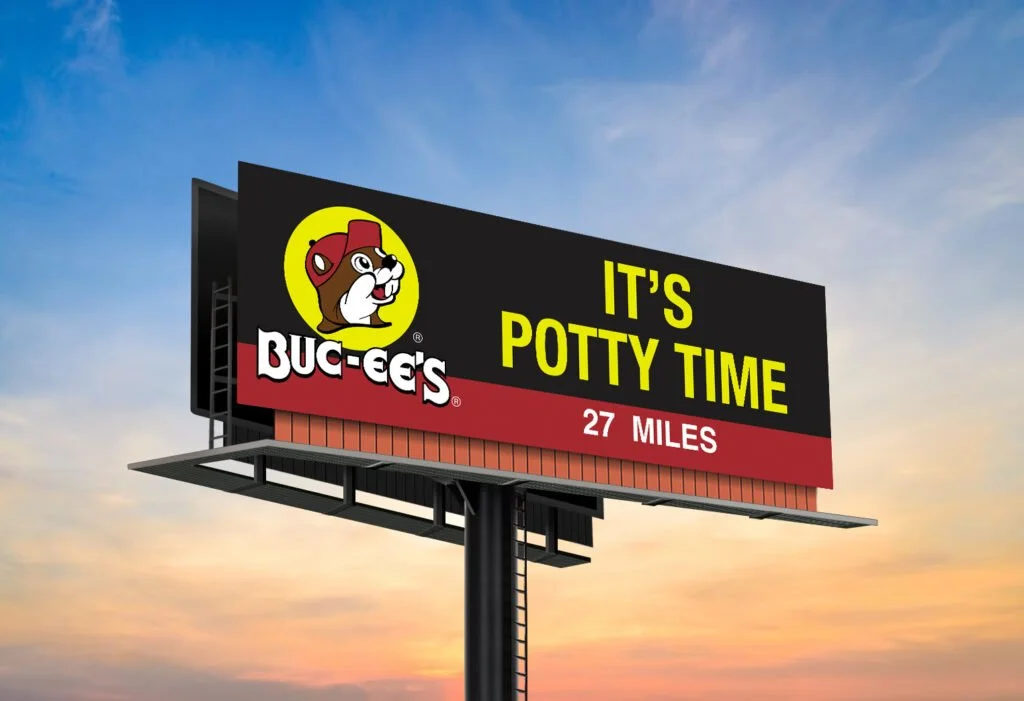
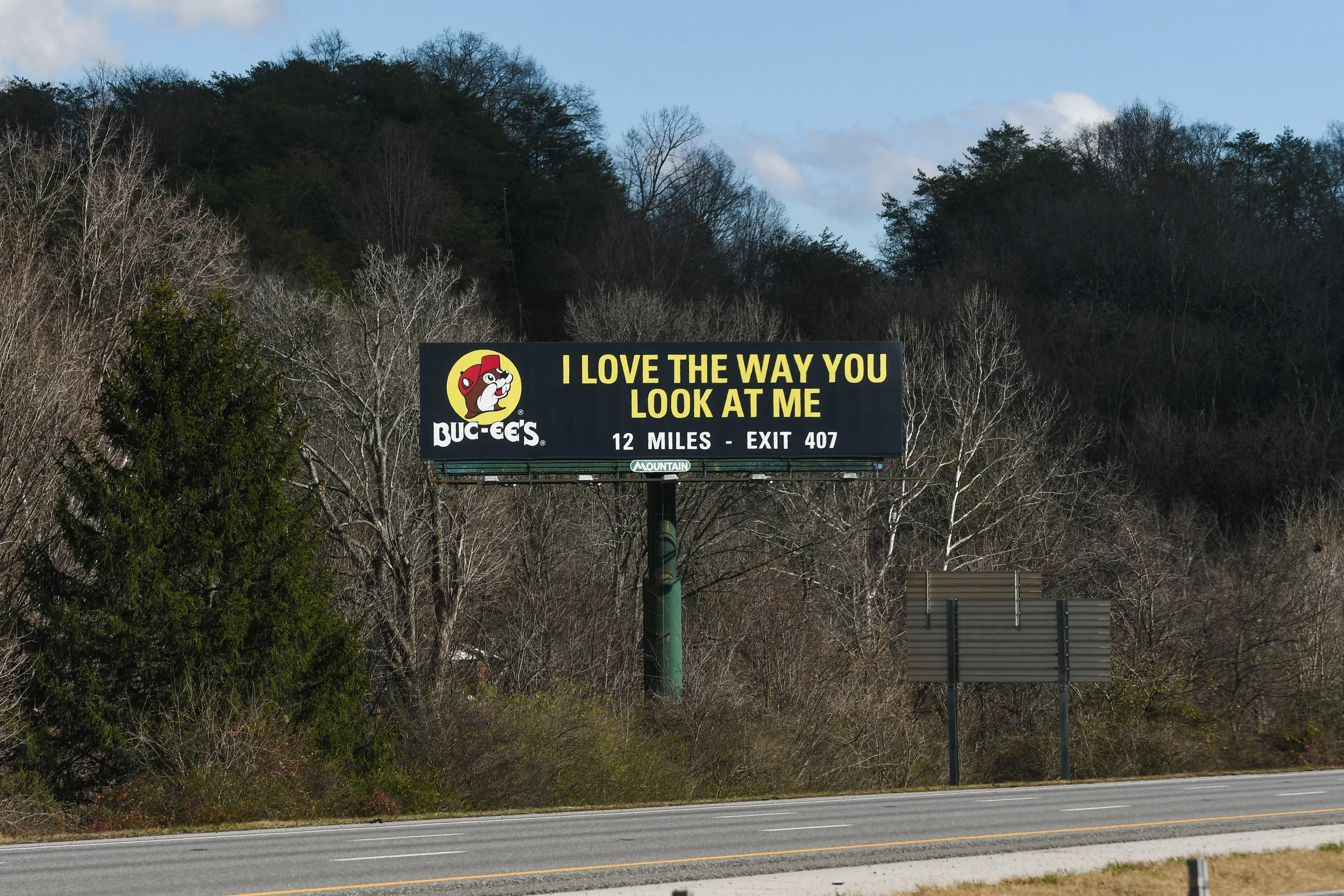
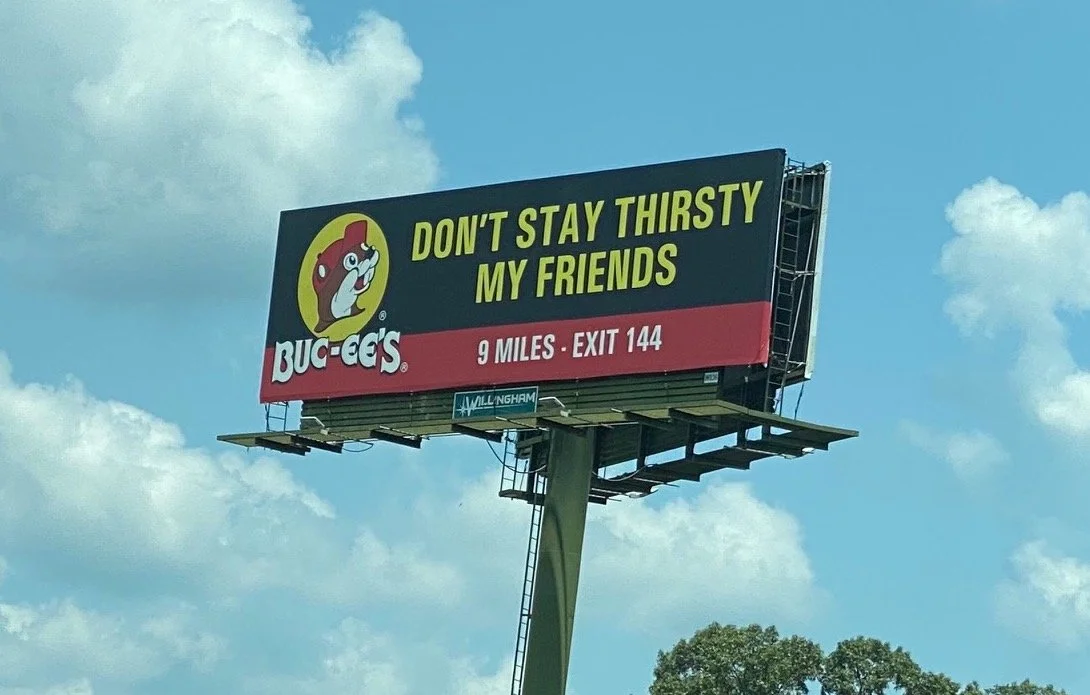
Their brand messaging walks a fine line between irreverent and cheesy, and it is a textbook example of an effective brand voice strategy. Here’s why:
It’s memorable: unexpected phrases that take a moment to decipher.
It’s simple: Easy to read when going 75 mph, no long sentences, no disruptive background images.
It’s timely: incorporating trendy terms like “slay” makes the brand seem contemporary.
It’s situational: Short, punchy, and often quite funny phrases break the monotony of driving often long distaces.
All of these billboards incorporate the same brand voice that makes them obviously Buc-ee’s, even if the logo wasn’t present. Buc-ee’s billboard campaigns represent the litmus test of branding: can marketing collateral, like a billboard, website, or social media post be recognized if the logo was removed?
Conclusion
Buc-ee’s brand strategy has made them a leader among travel pit-stops. By leveraging foundational brand strategies such as Know, Like, Trust and brand voice, they have both positioned themselves as not just the best place to stop while traveling, but also created a sense of community and fostered tribalist mentality for those who do stop. I’ll be curious to see how this brand evolves as they expand into new markets, especially the north.
![[Interview] Mastering Event Design and Branding](https://images.squarespace-cdn.com/content/v1/520554d2e4b004c7f36bec69/1789608025467-7IHE8I3LSY54IT1PGK6N/BEYOND+THE+BEO+copy.jpg)
![[Video] Differentiators: The Key to a Unique and Trustworthy Business](https://images.squarespace-cdn.com/content/v1/520554d2e4b004c7f36bec69/1683774660535-J2H0J7TEUNNIW52ZZSLS/differentiators+2.jpg)
![[Video] What B2B Organizations Can Learn from Grubhub’s Super Bowl Ad](https://images.squarespace-cdn.com/content/v1/520554d2e4b004c7f36bec69/1782261989393-KKHR1LUKY3W8X51BXMMT/superbowl+2026+WIDE.jpg)